Hello everyone,
It feels like the new year just started, and now January is already coming to an end. The cold weather is still harsh, and we’re all eagerly waiting for the arrival of spring.
As the cold begins to ease and the first signs of spring start to appear, one of the traditional treats you’ll see at wagashi shops is uguisu mochi. This elegant treat consists of soft gyuhi (a type of chewy rice dough) wrapped around sweet red bean paste, and is dusted with roasted soybean flour or green soybean flour. Today, I’d like to share with you the origin and preparation method of this seasonal delicacy that is so closely associated with spring.
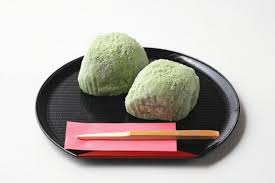

the origin of uguisu mochi
The origin of the name uguisu mochi is linked to Toyotomi Hideyoshi, who is said to have been the one to give it its name. When Hideyoshi’s brother, Hidenaga, who was the lord of the Yamatokoriyama Castle, invited Hideyoshi to a tea ceremony, a type of rice cake was offered to him. Pleased by its taste, Hideyoshi named it “uguisu mochi” because its appearance resembled that of the uguisu (Japanese bush warbler).
Originally, uguisu mochi was a yellowish color (like roasted soybean flour), but after World War II, a green element was added to evoke the feeling of spring, and roasted green soybean flour began to be used instead.
Incidentally, the uguisu mochi that was presented to Toyotomi Hideyoshi was made by a historic shop called “Honke Kikuya” in Yamatokoriyama, Nara Prefecture. This store, which has a history of over 400 years, sells uguisu mochi under the name “Oshironokuchi mochi”. The adorable, bite-sized Oshironokuchi mochi features a delicate sweetness from the red bean paste, a melt-in-your-mouth texture from the mochi, and a delightful roasted soybean flour aroma. It’s a historic and elegant treat—perhaps you’d like to try it sometime?
Uguisu kinako and kinako
Generally, uguisu mochi uses uguisu kinako (green soybean flour) made from green soybeans, but sometimes regular kinako (roasted soybean flour made from yellow soybeans) is used instead.
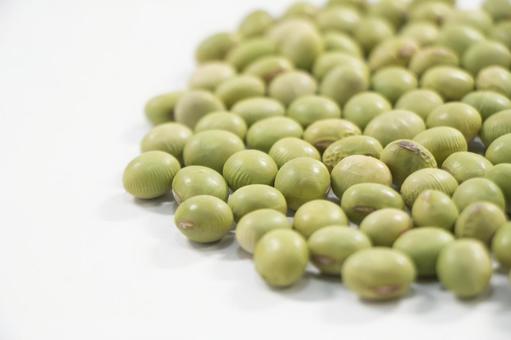
• Uguisu kinako: It has a light greenish color and is characterized by a savory, roasted aroma with a subtle sweetness.
The photo shows ao daizu (green soybeans)
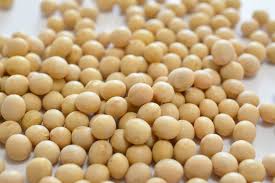
• Regular kinako: It is yellow in color, with a stronger roasted aroma and a more rustic, earthy flavor.
The photo shows daizu (soybeans)
Depending on the wagashi shop, it may vary, but using green soybean flour (kinako) enhances the “warbler-like” quality.
Memories of my training days
I remember struggling with the wrapping of the uguisu mochi when I was still a freshman.
Unlike kneaded sweets (nerikiri), the mochi dough is piping hot and very soft, so if you don’t wrap the filling quickly, the shape won’t turn out neat. The filling itself is also made softer to match the consistency of the dough, and scooping the filling with a spatula and placing it onto the dough was quite a challenge. The size and weight were all inconsistent, and at first, I couldn’t do it well at all. Since I was working face-to-face with the head chef, I gradually improved by observing their hand movements. Watching the head chef’s skillful technique, I thought to myself, “I can see why professionals are different. I need to pick up these skills quickly.”
The uguisu mochi recipe I’ll introduce next is an easy-to-follow method, so don’t worry!
simple Homemade uguisu Mochi Recipe
Here’s an easy recipe for homemade uguisu mochi that you can make at home!
Ingredients (for 6 pieces):
- Shiratama-ko (sweet rice flour) … 50g
- Water … 80ml
- Sugar … 30g
- Koshi-an (smooth red bean paste) … 120g (divided into 6 portions and rolled into balls)
- Uguisu kinako (or regular kinako) … as needed
Instructions:
- Make the mochi dough:
- In a bowl, add the shiratama-ko and gradually mix in the water.
- Once the lumps are gone, add the sugar and mix well.
- Transfer the mixture to a microwave-safe container and microwave (600W) for 1 minute without covering.
- Take it out, stir well, and microwave for another minute. Repeat this process until the dough becomes transparent.
- Shape the mochi:
- Spread some uguisu kinako on a cutting board, then carefully take out the hot mochi dough (be careful, it’s hot!).
- Divide the dough into 6 portions and wrap each portion around a ball of koshi-an.
- Pinch the ends slightly to create a shape resembling a bush warbler.
- Finish:
- Coat the mochi with uguisu kinako, and it’s done!
Uguisu mochi is best enjoyed with matcha or hojicha tea. The gentle sweetness and the roasted aroma of the kinako will make you feel the arrival of spring.
It’s also perfect for celebrations like Hinamatsuri (Doll Festival) or hanami (flower viewing). If you make it yourself, it’s a fun activity to enjoy with your children as well.
Try making this homemade uguisu mochi and savor the beauty of spring!