Hello everyone,
March 3rd is “Hina Matsuri,” also known as the Girls’ Festival. It is a traditional Japanese celebration wishing for the healthy growth and happiness of girls. During Hina Matsuri, it is customary to display hina dolls and enjoy special foods. Today, I will introduce the origin of Hina Matsuri and how people celebrate it!
the origin of hina matsuri
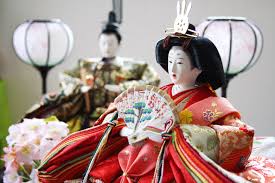
The history of Hina Matsuri dates back over 1,000 years to the Heian period. Originally, there was a custom called “Nagashi-bina,” where paper dolls (called hitogata) were floated down rivers to ward off evil spirits. This practice gradually evolved, eventually transforming into the current tradition of displaying hina dolls.。
Hina Matsuri is also called “Momo no Sekku” (Peach Festival). This is because March is the season when peach blossoms bloom, and peaches were believed to have the power to ward off evil spirits.
what is Hina dolls?
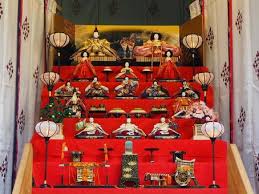
During Hina Matsuri, “hina dolls” are displayed. These dolls recreate the wedding ceremonies of the aristocracy from ancient times, and they mainly consist of the following types of figures:
- お内裏様 (Odairi-sama) and お雛様 (Ohina-sama): These are the figures representing the Emperor and Empress.
- 三人官女 (Sannin Kanjo): Three women who serve the Empress, often seen attending her.
- 五人囃子 (Gonin Bayashi): A five-member music ensemble that plays traditional instruments.
- 随臣 (Zuishin) and 仕丁 (Shichou): Figures representing attendants and servants who perform tasks like guarding and doing miscellaneous duties.
Hina dolls are often displayed on tiered platforms, but recently, more compact versions and dolls displayed in glass cases have become popular as well.
wagashi for hina matsuri
During Hina Matsuri, people enjoy special foods. Here are some of the most representative dishes.
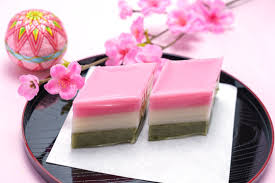
菱餅 Hishi mochi
A sweet made by stacking pink, white, and green rice cakes, which are then cut into a diamond shape. This treat is called hishi mochi and is a traditional part of the Hina Matsuri celebration.
The origin of hishi mochi is said to lie in the ancient Chinese festival called Joushi Setsu (上巳節), which is also linked to the origins of Hina Matsuri.
In the Joushi Setsu festival, it was customary to eat green rice cakes filled with hahako-gusa (a type of plant), which were believed to ward off evil spirits. However, when this practice was brought to Japan, it was thought to be inauspicious because hahako-gusa was associated with the idea of “mother and child,” which some considered an ill omen. As a result, people started using yomogi (mugwort) instead of hahako-gusa in the rice cakes.
Later, during the Edo period, white rice cakes with hishi seeds were added, making the hishi mochi two-colored. In the Meiji period, pink rice cakes made with kuchinashi (gardenia) fruit were introduced, and the three-colored hishi mochi in “green, white, and pink” became widely cherished.
The colors of the hishi mochi are achieved through natural ingredients: pink comes from kuchinashi, white from hishi seeds, and green from yomogi (mugwort). Each color carries different symbolic meanings and medicinal properties, reflecting specific wishes and hopes embedded in the tradition.
- Pink (桃): Wards off evil spirits and honors ancestors.
- White (白): Represents prosperity for descendants, good health, and protection from misfortune.
- Green (緑): Wards off evil spirits and promotes good health.
The order of the colors also holds a beautiful meaning. When arranged from the bottom as “green, white, and pink,” it symbolizes the emergence of new buds from under the snow, followed by the blooming of peach blossoms, marking the arrival of spring. This arrangement not only celebrates the arrival of spring but also carries the wish for girls to live a long, healthy life.
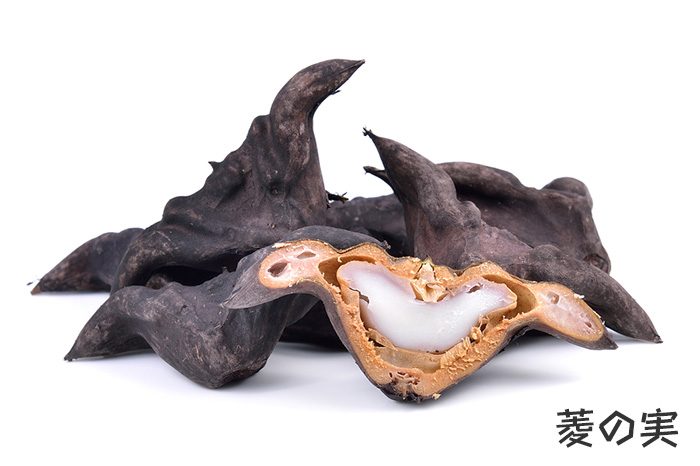
The shape of hishi mochi is said to be inspired by the hishi seeds (water chestnuts), which are diamond-shaped. This design reflects the traditional connection to the hishi plant and its symbolic role in the Hina Matsuri celebrations.
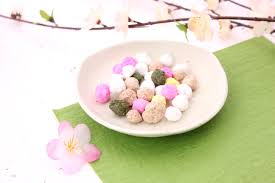
ひなあられ hina alale
It is a type of rice snack made from glutinous rice. The rice cakes are cut into small pieces and then either grilled or fried, with seasonings added to enhance the flavor.
Hina arare can be broadly divided into two types, depending on the region. One type is made from popped rice (like puffed rice) coated in sugar for a sweet flavor. The other type consists of small okaki (rice crackers) flavored with soy sauce or other savory seasonings.
These rice snacks are typically colored white, green, and pink. The white represents snow, the green symbolizes new leaves or sprouts, and the pink signifies life, embodying the themes of renewal and growth associated with Hina Matsuri.
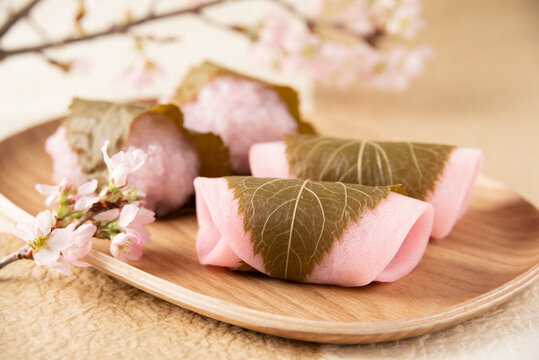
桜餅 sakura mochi
There are two types of sakura mochi, both of which are traditional Japanese sweets that evoke the feeling of spring.
- Domyoji sakura mochi is made with pink-colored glutinous rice, with sweet red bean paste (anko) inside.
- Chomeiji sakura mochi is made with a thin crepe-like dough wrapped around the red bean paste.
On March 3rd, the day of Hina Matsuri, sakura mochi is the most popular treat sold at wagashi (Japanese confectionery) shops, as it is closely associated with the celebration of the arrival of spring.
On Hina Matsuri day, I can only remember making sakura mochi from morning until the end of the day. We would make them, sell them, and then make more to keep up with demand—it was a cycle that continued all day long. It was tough day but now it’s a wonderful memory.
Why not celebrate the once-a-year Hina Matsuri by enjoying some traditional wagashi? It’s a perfect way to embrace the spirit of the season and enjoy the beautiful customs of the festival!