Hello! The temperature has gradually been rising, and we’ve been experiencing more humid days. I feel the rainy season is coming
To coincide with the onset of rainy season, we held a parent-child wagashi workshop on the 26th. I was lucky to find a spacious venue this time, and although there were over 20 participants, there was still plenty of room even with everyone inside. Participants had ample workspace to comfortably make sweets.
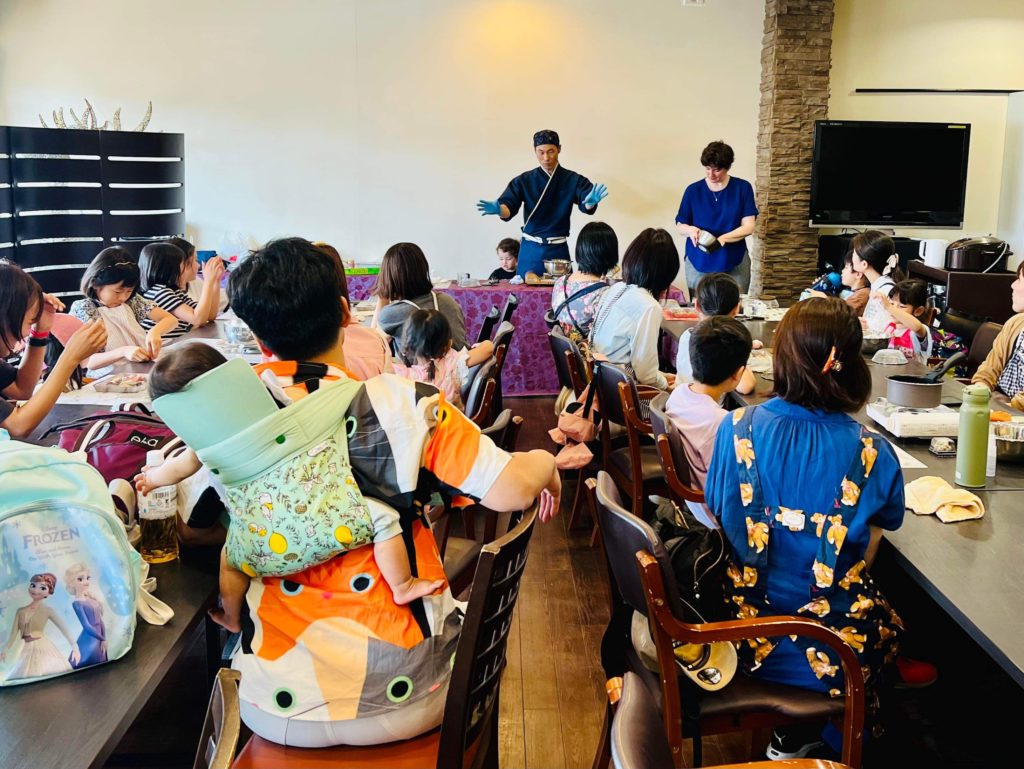
The theme for this class was “rainy season”. When we think of rainy season, hydrangeas come to mind, as well as the sweet “mizubotan”. Mizubotan is a confection of pink bean paste wrapped in kudzu or agar, and it represents a peony blooming gracefully in the water. I learned to make this confection at the first shop I apprenticed at, and it was the most impressive sweet I had encountered in my life until then. Using high-quality Yoshino kudzu, the inside is filled with plum-flavored bean paste. I remember being moved by its deliciousness the first time I tasted it

I was surprised that such a delicious confection could be made with such simple ingredients. Since my wife tasted this sweet for the first time, it has become her favorite. This time, I slightly modified the method to make it easier for beginners and suitable for reproduction at home.
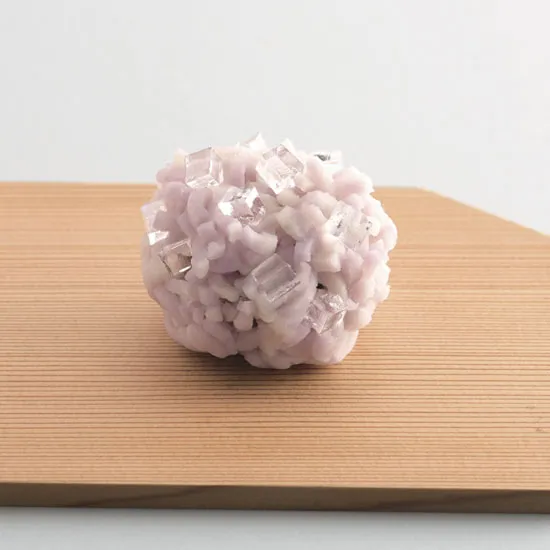
The other sweet we made was “kinton”, inspired by hydrangeas. It features a gradation of purple and white nerikiri (a type of sweet bean paste), with red sweet bean paste wrapped inside and topped with a jelly-like agar called “kin gyoku kan”. I devised the recipe so that it could be made using tools commonly found in the home.
First, I demonstrated how to make mizubotan. Everyone was amazed to see the kudzu dough, initially in liquid form, gradually turn into a thick slime-like texture as it heated up. Since most people don’t have the opportunity to cook with kudzu on a regular basis, I think this transformation was fascinating for all the participants.
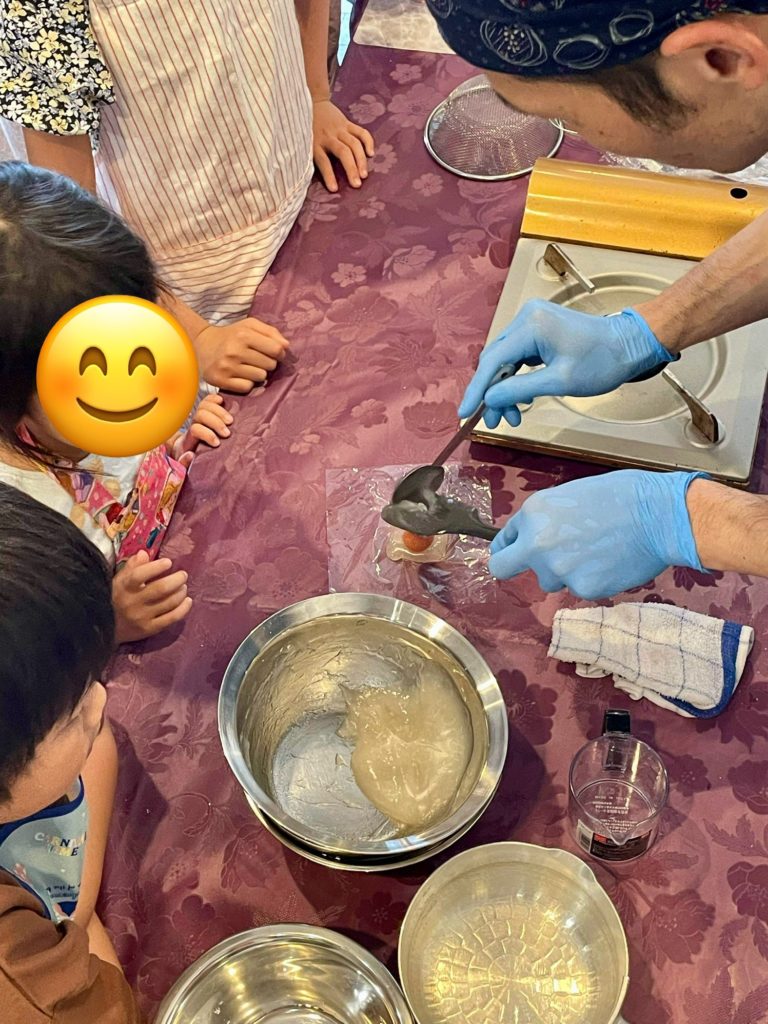
After demonstrating how to make mizubotan, I divided the participants into four groups. Each group had a tabletop stove and the ingredients to make their own mizubotan. Everyone worked together enthusiastically, enjoying the process. It was fun to see the variety in sizes and shapes at each table.
After that, we moved on to making kinton. After my demonstration of this, each person made their own. Some followed my example closely, while others created their own unique designs, resulting in a variety of hydrangea shapes. It was enjoyable to see the children’s creativity at work. There were so many different designs, which is part of what makes wagashi an art form.
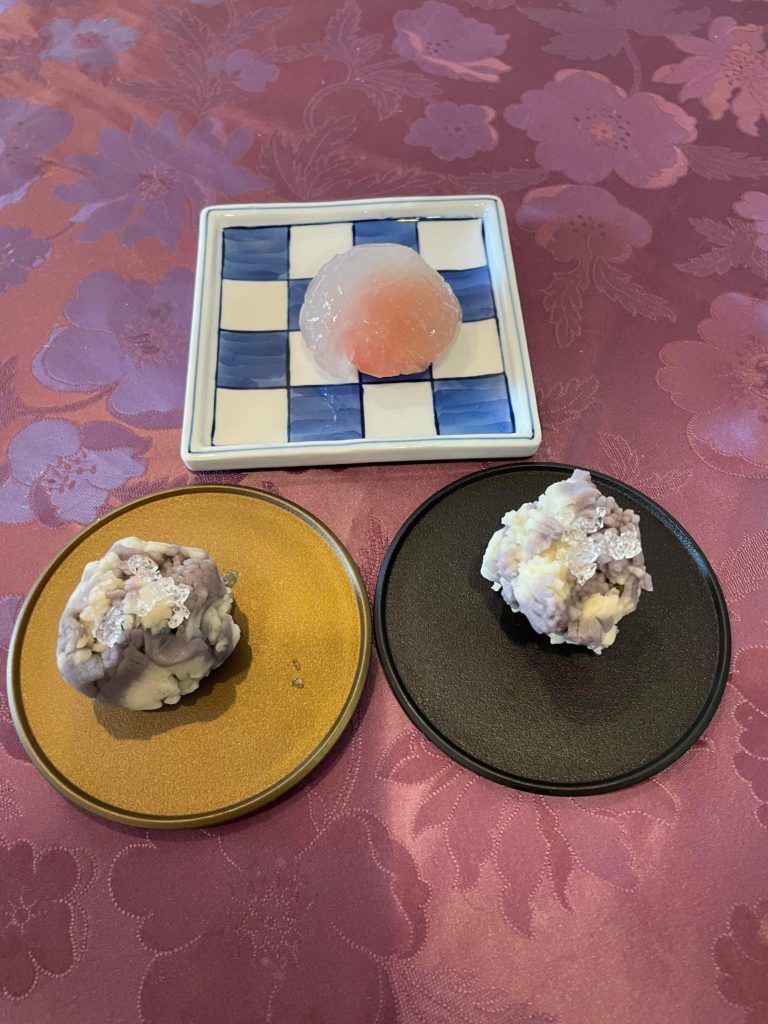
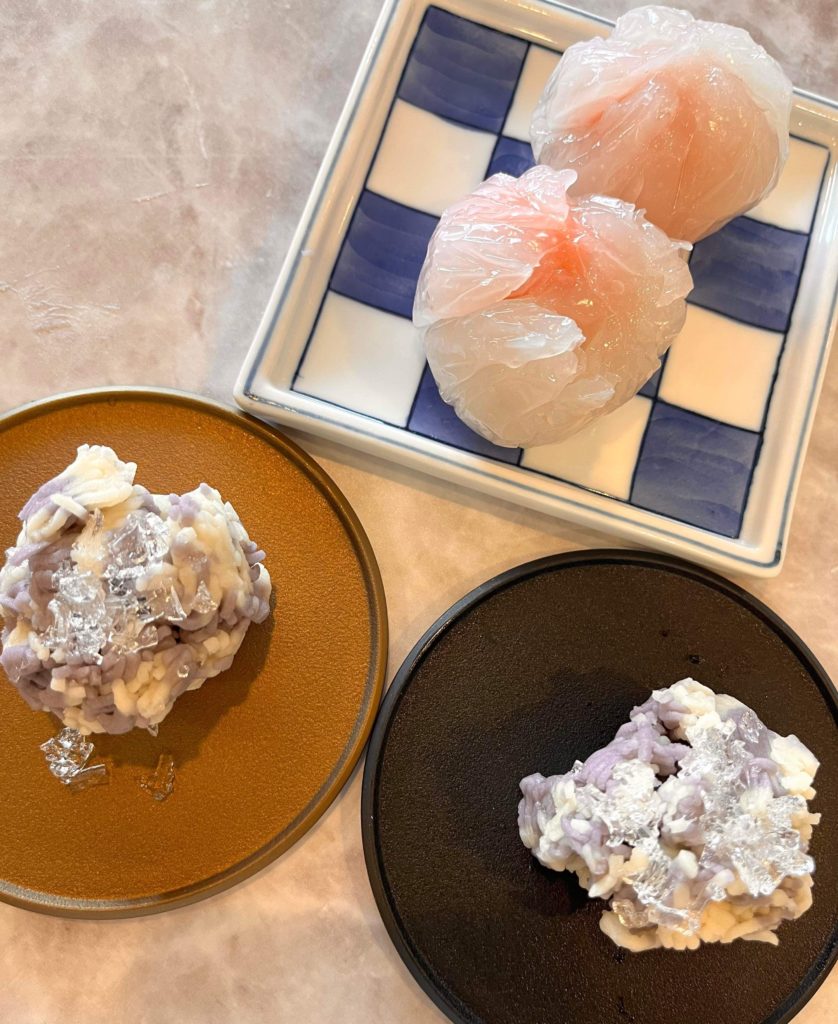
Finally, we all enjoyed tasting the sweets. Most people had never heard of mizubotan before, so it was a great opportunity to introduce everyone to new wagashi.
Apart from the usual sweets found in supermarkets, there are so many different types of wagashi out there! With each event, I feel more strongly that I want to introduce even more varieties of wagashi. I’m already excited planning the next event.
Thank you to everyone who participated! Please look forward to discovering more new wagashi next time!
Until next time, take care and see you soon!