The tradition of Tango no Sekku, or the Boys’ Festival, originates from the story of Qu Yuan, a close aide to the king of the Chu state in China around 2300 years ago.
Qu Yuan (340 BC – 278 BC) was a politician and poet known for his strong sense of justice and love for his country, which garnered him widespread admiration. However, Qu Yuan fell out of favor due to political machinations and was eventually exiled from his homeland. Disheartened by the fate of his country, Qu Yuan drowned himself in the Miluo River.
The people of Chu attempted to save him by sending out boats, beating drums to scare away fish from his body, and throwing rice dumplings (zongzi) into the river to prevent the fish from consuming him. These actions later evolved into the Dragon Boat Race and the custom of eating zongzi. This day became an annual festival in China, commemorating Qu Yuan’s death on May 5th each year, and spread throughout the country.
Qu Yuan, dedicated to his country and its people, was mourned after his death. The tradition of throwing many zongzi into the river to pray for the country’s peace emerged. Eventually, this custom evolved into the important court ritual of Tango no Sekku, believed to ward off illness and disasters.
In Japan, Tango no Sekku dates back to the Nara period. Originally, “Tango” referred to the first “horse” day of the month and was not limited to May. However, due to the phonetic similarity between “go” (five) and “go” (horse), it eventually became associated with May 5th.
During the Nara period, rituals were performed on Tango no Sekku to ward off illness and disasters, including gathering medicinal herbs, bathing with orchid leaves, and drinking sake infused with irises. It is said that rituals such as decorating with iris leaves and shooting arrows from horseback were also performed to ward off evil spirits believed to bring illness and calamity.
The tradition of flying carp streamers and displaying samurai dolls to celebrate boys’ future success began in the Edo period.
☆Kashiwa-mochi or Chimaki?
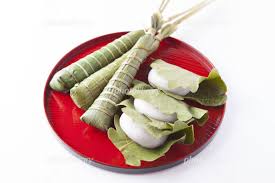
Regarding the food of Tango no Sekku, in the west area of Japan, there is “chimaki” (the Japanese name for zongzi), while in the east, there is “kashiwa-mochi” (oak leaf-shaped rice cakes). When carp streamers fly high in the sky, some people think of kashiwa-mochi,” while others think of chimaki. Why is that?
It’s due to the difference in culture between west (Kansai) and east (Kanto) Japan. When the Tango no Sekku tradition was introduced from China during the Heian period, chimaki spread nationwide. Later, during the Edo period when Tango no Sekku became one of the five seasonal festivals, kashiwa-mochi became popular in Edo and spread around the Kanto region, while the Kansai region, valuing tradition, continued with chimaki. This trend was solidified by the end of the Edo period, as documented in the literature of the time.
So why do people eat chimaki or kashiwa-mochi? In fact, there is a connection to the roots of Tango no Sekku.
☆Chimaki (or zongzi)
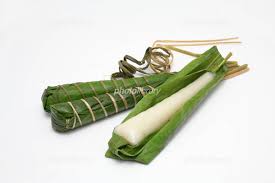
The origin of chimaki is related to Qu Yuan, who served as the basis for Tango no Sekku. Citizens mourned Qu Yuan’s death and tried to prevent his body from being eaten by fish when he drowned in the river. They beat drums from boats and threw offerings into the water, but these offerings were being stolen by an evil dragon before reaching Qu Yuan. To prevent this, they wrapped the glutinous rice in leaves of trees dragons disliked, tied them with five colored threads (red, blue, yellow, white, black) to expel evil, and then floated them down the river, ensuring they reached Qu Yuan safely.
This marked the beginning of the tradition of making zongzi/chimaki on May 5th in China, which spread to Japan along with Tango no Sekku.
Also, the five-colored threads tied around the chimaki symbolize protection against evil so children can grow up safely, a concept reflected in the colors of carp streamers as well.
☆Kashiwa-mochi
While chimaki originated from China, kashiwa-mochi is of Japanese origin, born in Edo (modern-day Tokyo). Oak, of which the leaves are used to wrap kashiwa-mochi, has long been considered a sacred tree, and since its old leaves do not fall until new ones sprout, the tree symbolizes the concept of “parents not passing away until their children are born,” or in other words, “the lineage never ending” and “prosperity for descendants.” This association with auspiciousness made kashiwa-mochi a popular food for Tango no Sekku, spreading primarily in the Edo region.
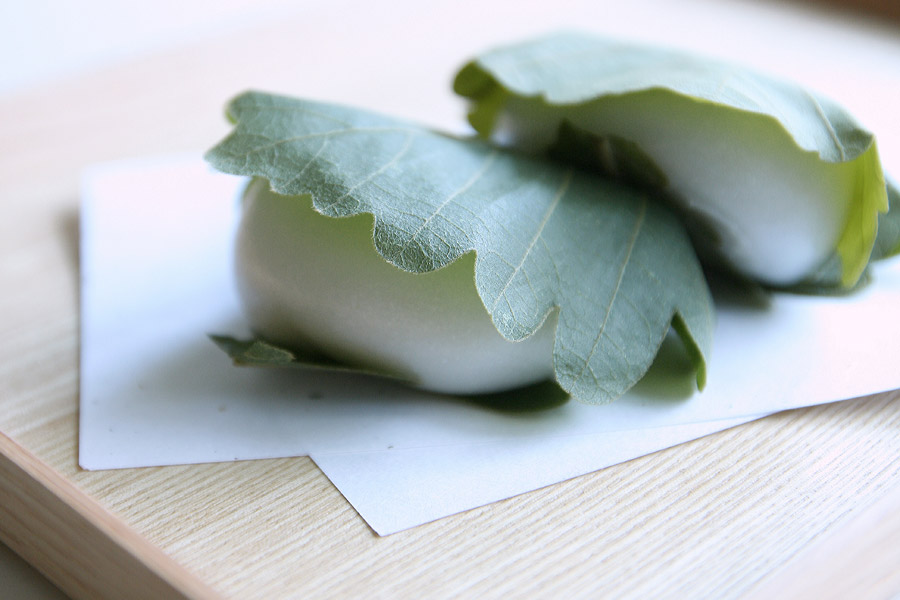
By the way, there are two types of leaves for kashiwa-mochi, green and brown. You might wonder why there are two different colors, but the explanation is simple.
During the Edo period when Tango no Sekku was celebrated in June (based on the lunar calendar where a year consists of 354 days), green leaves were used. However, with the introduction of the Gregorian calendar during the Meiji period (where a year consists of 365 days), Tango no Sekku shifted to May, leading to the use of brown leaves.
In May, oak leaves are not fully grown to wrap the mochi, so they had to preserve leaves from the previous year for use. The steaming and drying of these leaves for long-term preservation resulted in brown-colored leaves.
Today, with advances in vacuum technology, last year’s leaves can be preserved while retaining their green color. However, due to the enduring popularity of the aesthetically pleasing brown type, many deliberately choose brown leaves. Some stores even offer kashiwa-mochi with oak leaves of different colors depending on the type of filling.
Nevertheless, whether green or brown, the charm of kashiwa-mochi remains unchanged, allowing one to savor its flavor while enjoying its fragrance.