Hello! If this is your first time to Wada Wagashi, welcome! If you’ve been here before, welcome back!
We recently held the first session of my new ‘Wagashi Experience’ class on June 23rd.
The sweets we made this time were “Ao-ume” (green Japanese plum) and “Bara” (rose).
The filling for ao-ume was plum-flavored white anko (sweet white bean paste), and for bara, it was koshi-an (smooth sweet red bean paste).
Since green plums are in season right now, I decided to make plum anko using them. I started by making candied green plums.
Homemade candied green plums are delicious. They’re not just sweet and sour; they also have a distinct plum fragrance. I feel like I could eat quite a few in one sitting!
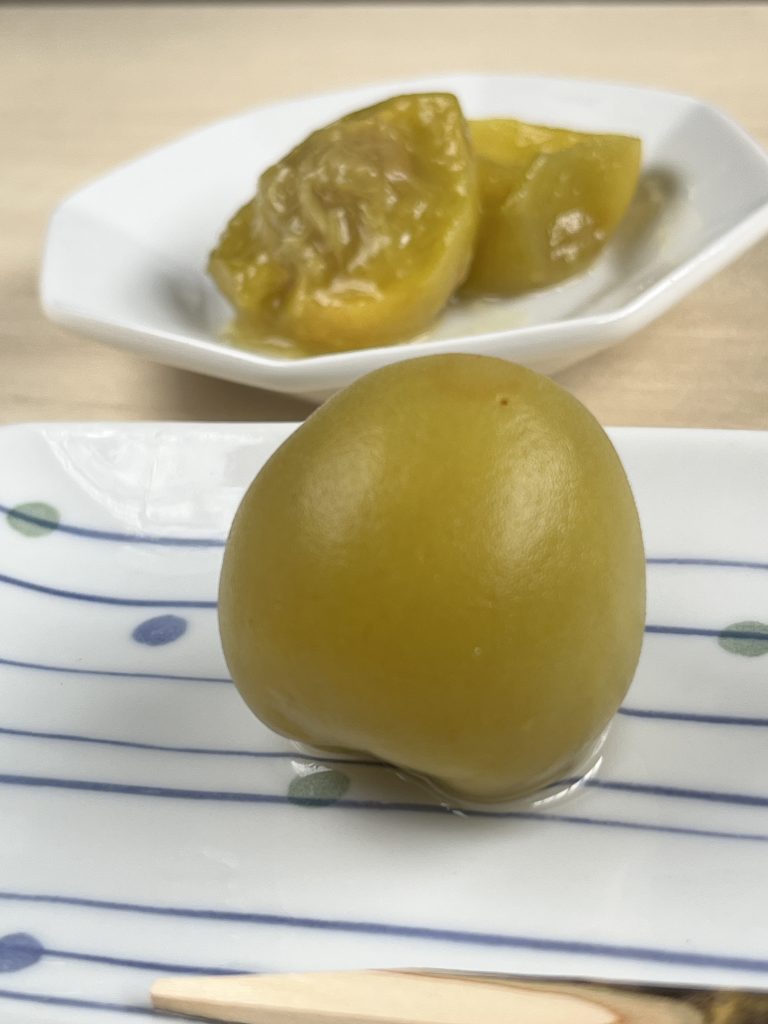
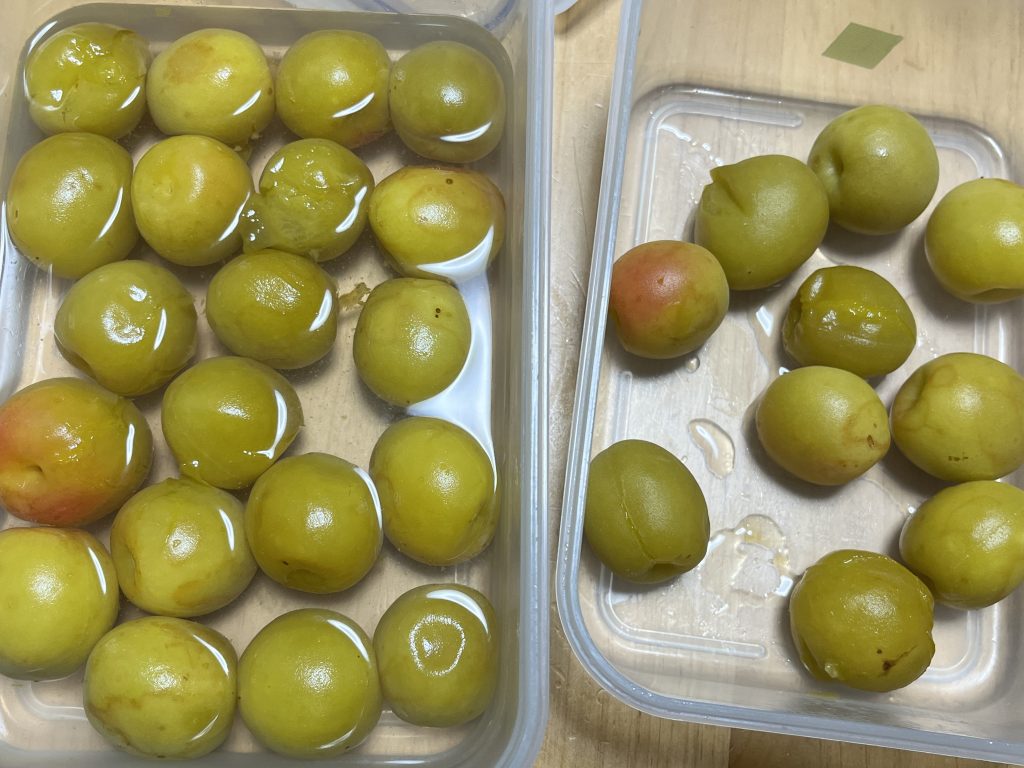

When I was working at a wagashi shop, I used candied plums bought wholesale to make sweets, so I didn’t really appreciate how much effort goes into making them. However, when I tried making them from scratch, I realized that making candied plums is quite time-consuming.
Thank you to the suppliers who make the candied plums!
Going back to the topic of this class, although I had several casual workshops since last year, this was the first official session of my Wagashi Experience class open to everyone, so I was nervously excited before it started.
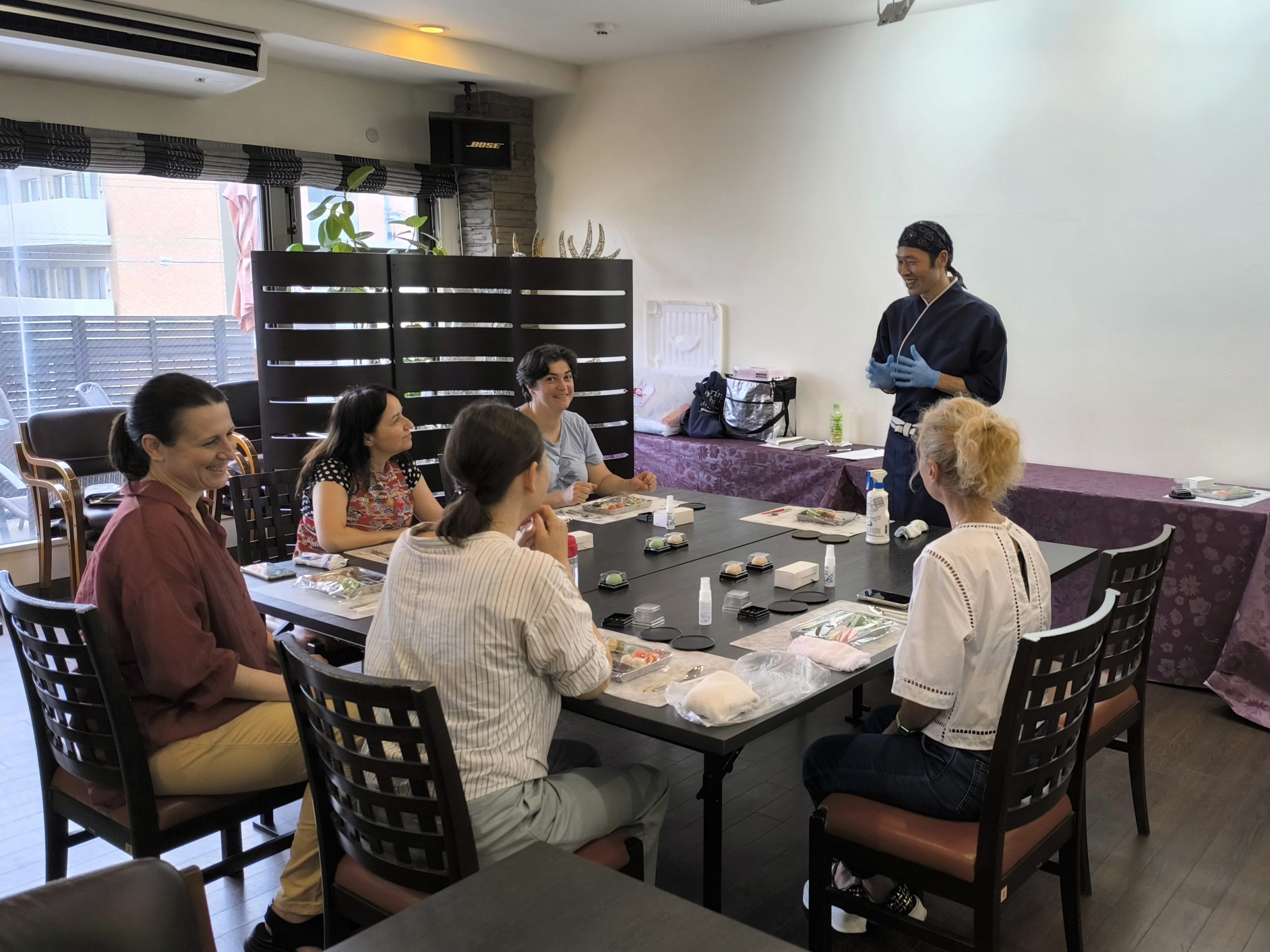
Oh man, there were quite a few things I needed to reflect on:
First, I forgot to say my own name during the self-introduction!
I also forgot to introduce my assistant/wife…
And my self-introduction ended up being unnecessarily long…oops.
But once we started making sweets, I had a blast chatting with everyone, occasionally answering questions, and we managed to have fun progressing through the lesson together.
We started with ao-ume (green plum) first.
To express the reddish hue of the plum, we used a technique called ‘urauchi’ to achieve a natural color blend.
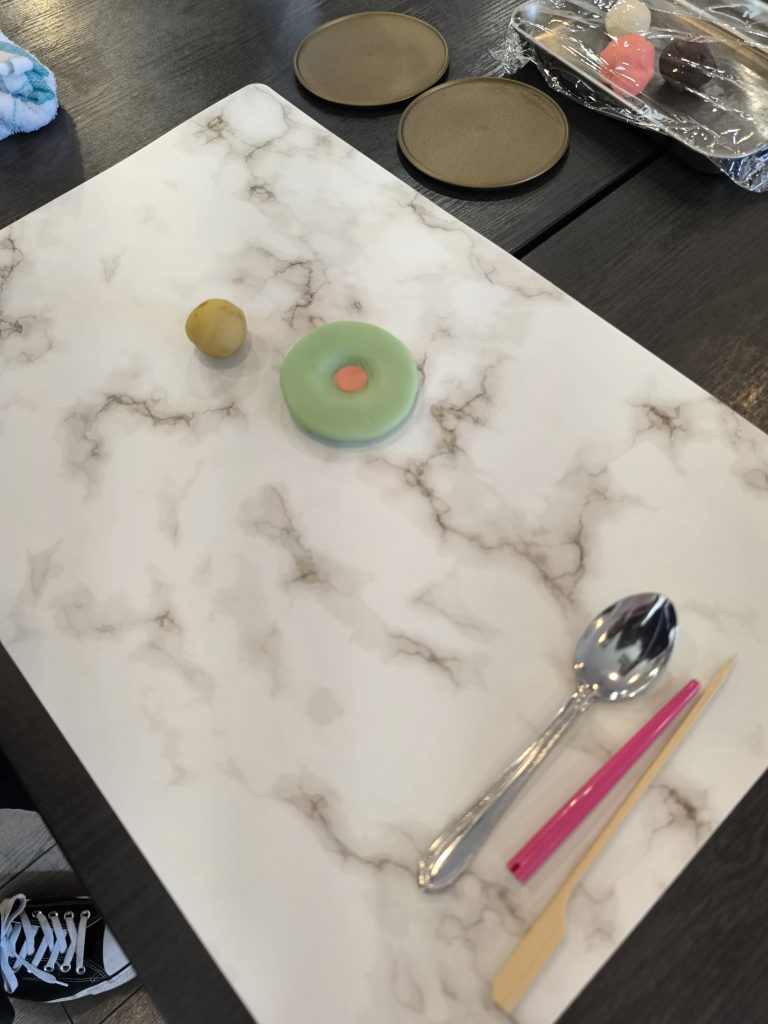
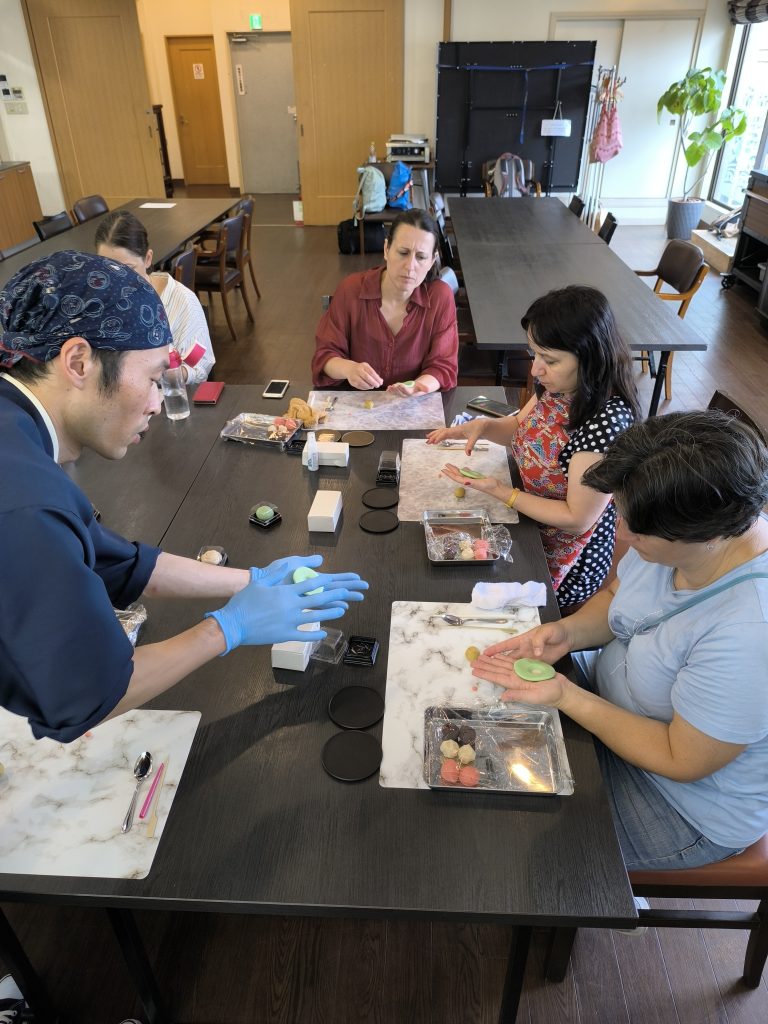
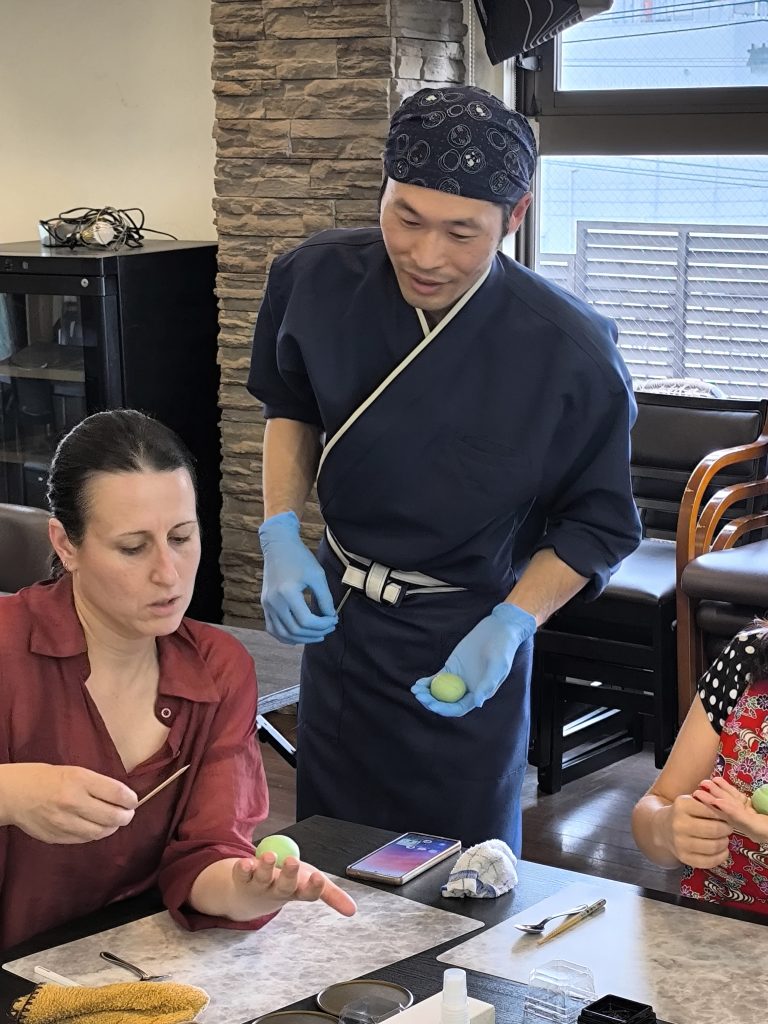
The tools used in the Wagashi Experience class are simple and everyday items. Through this class, I want to express that, “Wagashi might seem difficult at first glance, but it’s actually not that hard, and you can make it without special tools.” Therefore, I intentionally use simple tools to add lines and patterns.
For the ao-ume, I used bamboo skewers and children’s chopsticks.
After that, we made bara (rose).
The process of making roses was a bit challenging, but everyone was focused and worked diligently.
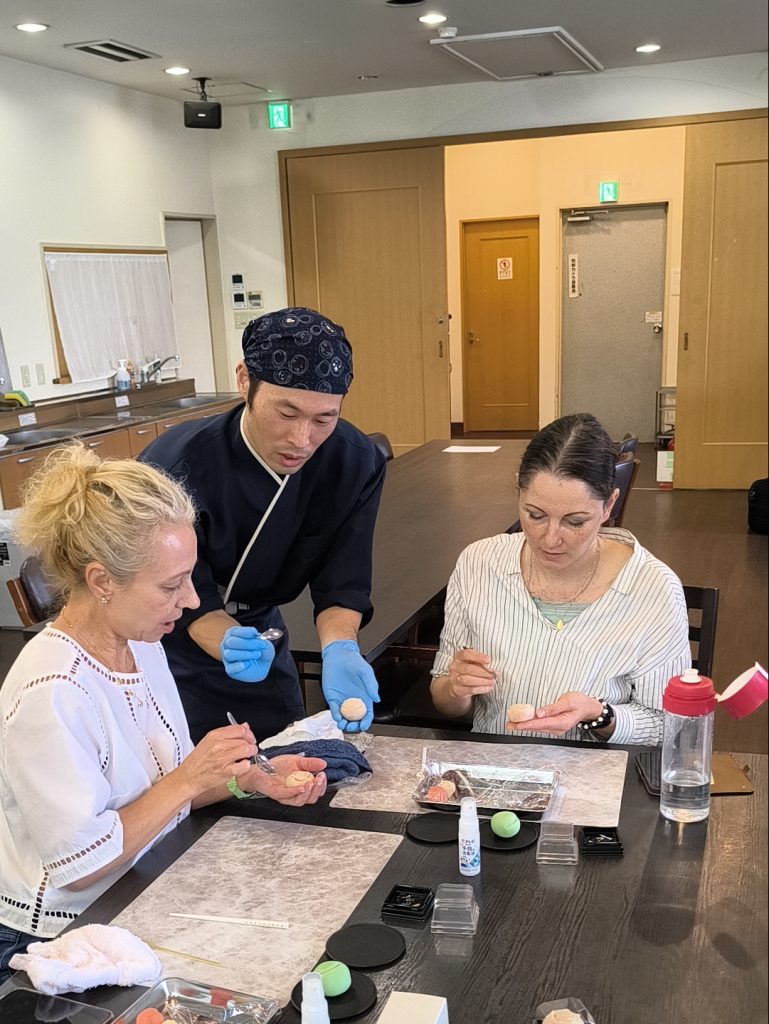
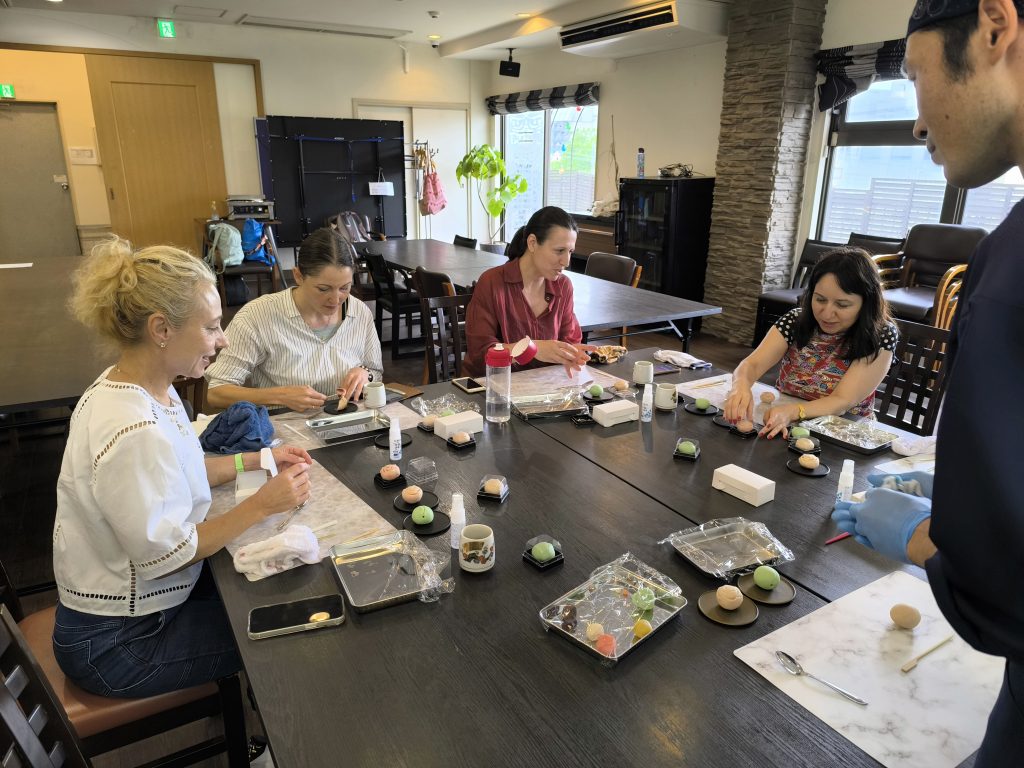
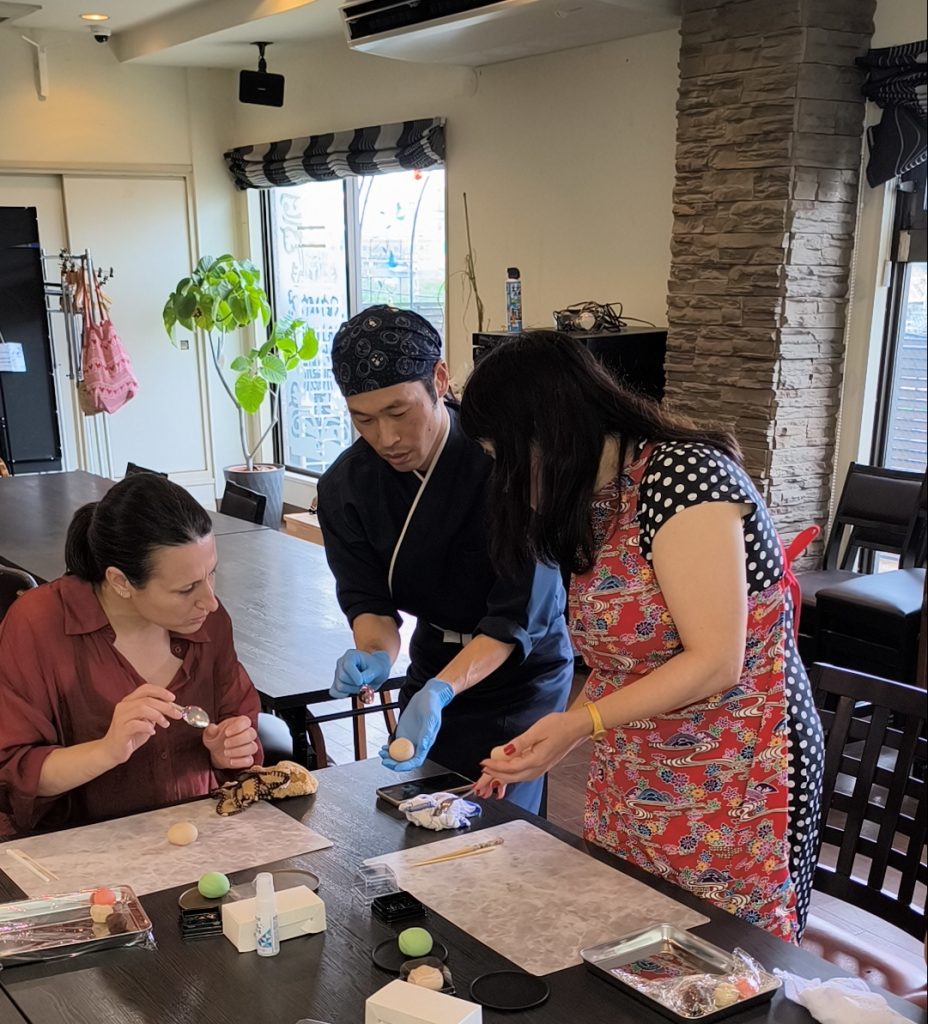
The key to making roses involves a lot of intuition, so trying to explain it in words is difficult. While teaching, I reflected on the fact that there are still aspects I haven’t fully grasped myself. I realized that conveying my own sense through words requires a deeper understanding.
After we finished making the wagashi, we tasted one together with tea.
While having tea, we relaxed and talked about wagashi. It’s not just about teaching the sweets themselves but also discussing their background and origins, aiming to help others understand more about wagashi.
I hope that beyond just making sweets, attendees can take home additional knowledge from the wagashi class. I enjoy talking about wagashi and the daily life of wagashi chefs, and want to share that with others.
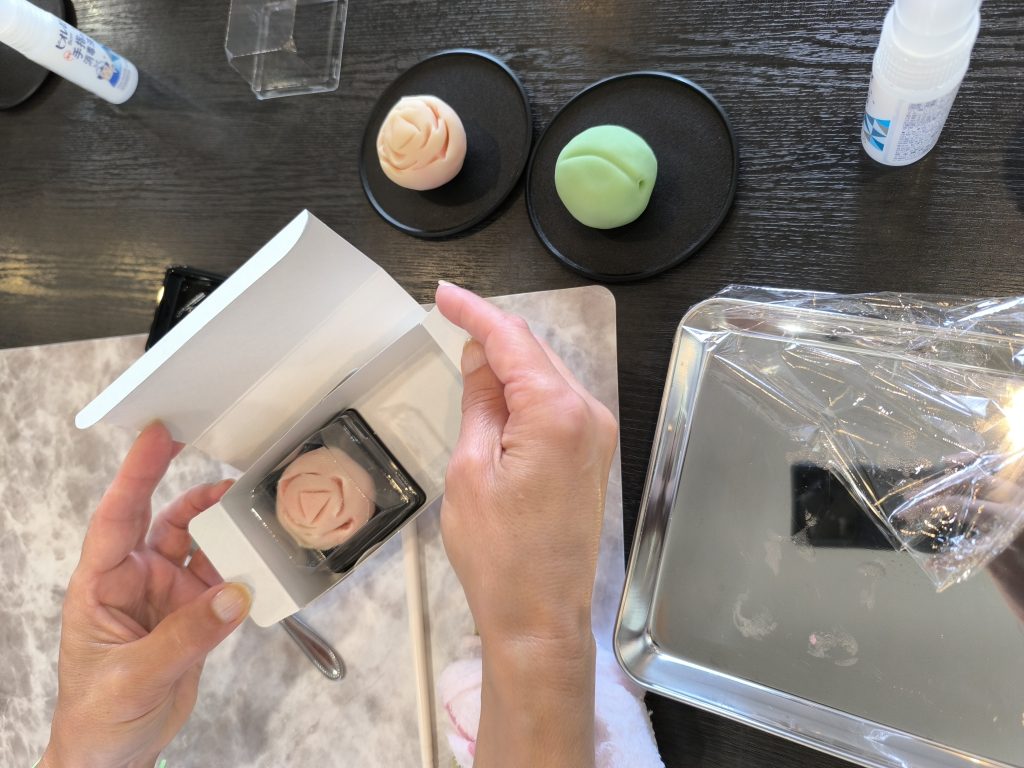
Attendees made three sweets – two to take home and one to eat together with tea.
Thank you very much for coming all the way to Nara from places like Akashi City in Hyogo Prefecture and Izumisano City in Osaka. Moving forward, I plan to continue holding wagashi classes not only in Nara but all around the Kansai region.
We look forward to your continued participation.
Thank you to everyone who participated this time. Let’s enjoy wagashi time together again♪