Hello everyone,
The temperature has dropped significantly, and it feels more like autumn now. October is coming to an end, and November is just around the corner. One of the notable events in November in Japan is Shichi-Go-San.
Shichi-Go-San (七五三) is one of Japan’s traditional ceremonies that has been celebrated for a long time. Although there are regional variations, it is basically a tradition for three-year-old girls, five-year-old boys, and seven-year-old girls and their families to visit shrines on November 15th to express gratitude and celebrate the growth of the children.
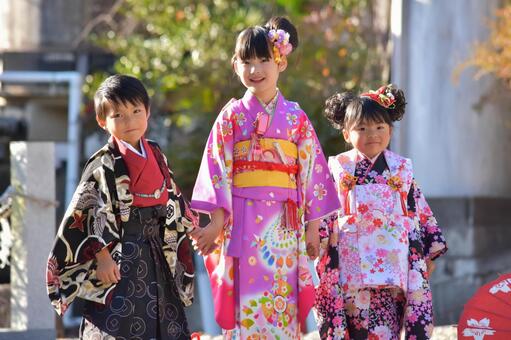
the origin of Shichi-Go-San
There are various theories regarding the origins of Shichi-Go-San, but it is said to be derived from milestone ceremonies that were conducted among the nobility during the Heian period, such as “Kamioki” (the starting of hair growth), “Hakamagi” (the first wearing of hakama trousers), and “Obitoki” (the first wearing of an obi). Let’s take a closer look at each of these ceremonies.
Three-Year-Old Boys and Girls: Kamioki
During the Heian period, it was customary for both boys and girls to have their hair shaved on the seventh day after birth, and they would typically be kept bald until around the age of three. This practice was believed to help keep the head clean, which in turn was thought to prevent illness and promote healthy hair growth.
When a child reached the spring of their third year, the “Kamioki” ceremony would take place, wishing for the child’s healthy growth and long life. It is said that during the “Kamioki” ceremony, people would celebrate by placing white threads or cotton resembling white hair on the child’s head as a symbol of wishing for longevity.
Five-Year-Old Boys: Hakamagi
During the Heian period, the “Hakamagi” ceremony was held for boys aged five to seven, marking the first time they would wear the formal attire of hakama. After undergoing this ceremony, boys would be regarded as young gentlemen and begin to wear a hakama and haori (a traditional jacket).
Seven-Year-Old Girls: Obitoki
The “Obitoki” ceremony celebrates the beginning of a girl’s ability to wear a proper obi (sash), transitioning from child-sized kimono with attached ties to wearing a full kimono with an obi. This change is referred to as “Himotoki” or “Obitoki.”
From this day forward, girls can tie their own obi, marking their recognition as a full-fledged member of society. The ceremony at age seven is considered particularly significant. Historically, high child mortality rates led to the belief that a child’s spirit was not fully anchored in their body until this age. Thus, it was thought that until they turned seven, children were still considered to be under the care of the gods, and it was only after reaching this age that they were treated as independent individuals.
the reason for November 15th
When a child turns seven, they are recognized as a “ujiko” (氏子), or a parishioner of the deity of their family shrine. This recognition involves a visit to the shrine, referred to as “ujiko-iri,” where the child is acknowledged as a member of both the local community and the spiritual realm.
Many families choose November 15th for this ceremony because it falls after the agricultural harvest. Furthermore, the 15th of the old lunar calendar corresponds to a day known as “Oni-no-Shuku,” a day when evil spirits are believed to be inactive, making it a favorable time for ceremonies.
Additionally, the month of November in the lunar calendar was traditionally a time for giving thanks for the harvest. The full moon on the 15th served as a symbolic occasion to express gratitude to the deity for blessings. Some also point to the fact that the numbers associated with Shichi-Go-San (7, 5, and 3) add up to 15, further linking this date to the significance of the ceremony.
the meaning of Shichi-Go-San
As mentioned in the origins of Shichi-Go-San, the ages of three, five, and seven are significant milestones for children. Over time, the ceremony evolved into a way to express gratitude to the deities for the child’s safe growth up to that point and to pray for their continued health and well-being.
Today, Shichi-Go-San remains a widely celebrated event in many households, where families pray for the healthy growth and happiness of their children.
wagashi of Shichi-Go-San
The traditional Japanese sweets used for the Shichi-Go-San celebration include:
- Chitose Ame (千歳飴): A long, red-and-white candy symbolizing long life.
- Kōhaku Manju (紅白饅頭): Red and white steamed buns that represent happiness and good fortune.
- Tsuru no Ko Mochi (鶴の子餅): Mochi shaped like the eggs of cranes, symbolizing longevity and good luck.
These sweets are often given to children during the celebration as part of the festivities.
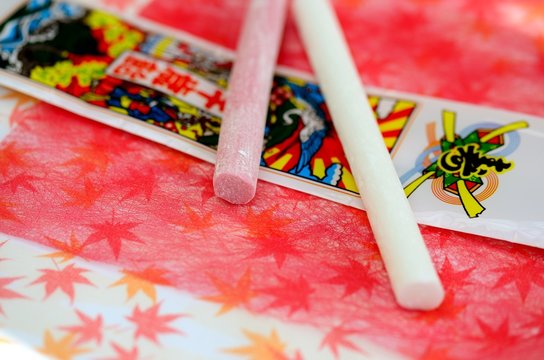
Chitose Ame (千歳飴)
The “Chitose Ame” received during shrine visits holds the meaning of “thousand years.” Parents offer this candy to symbolize their wishes for their children’s healthy growth and longevity. The long, red-and-white striped candy represents the hope for a long and prosperous life.
Chitose Ame is primarily made from ingredients like glucose syrup, sugar, starch, and skim milk powder. Some manufacturers may also include sweetened condensed milk, fresh cream, vegetable fats, salt, and emulsifiers.
The tradition of Chitose Ame is said to have begun in the Edo period when a candy shop called Shichibei in Asakusa started selling it.
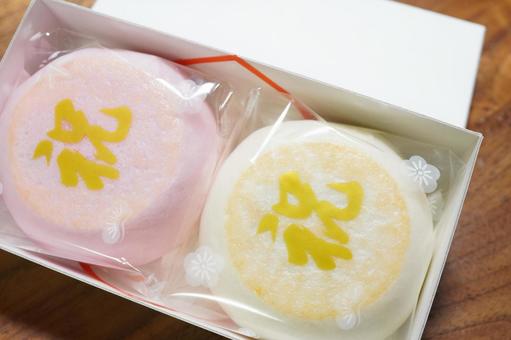
Kōhaku Manju (紅白饅頭)
The traditional sweets associated with Shichi-Go-San are also commonly used for other celebrations, such as entrance and graduation ceremonies. Examples include “Kōmugi Manju,” made with wheat flour, and “Jōyō Manju,” made with jōyō flour and yam.
The red and white colors are significant in celebratory contexts, symbolizing good fortune and happiness. It is common to see red and white decorations at festive occasions. There are various theories about the symbolism of these colors, but one prominent interpretation is that red represents the birth of a child, while white, often associated with funeral garments, signifies death or parting. By combining these two colors, the concept of life itself is represented. Additionally, the use of adzuki beans in the filling is thought to ward off evil spirits, further adding to their auspiciousness.
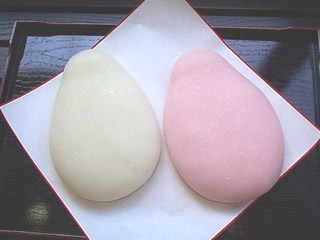
Tsuru no Ko Mochi (鶴の子餅)
Similar to Kōhaku Manju, “Tsuru no Ko Mochi” is another traditional sweet often used for various celebrations. This simple confection is made from “jōshin-ko” (a type of glutinous rice flour) and sugar, and it is also known as “suama.”
There is a proverb that states, “Cranes live for a thousand years, and turtles for ten thousand years,” highlighting the auspiciousness associated with both animals. The “Tsuru no Ko Mochi,” shaped like crane eggs, embodies this symbolism of longevity and good fortune, making it a fitting treat for festive occasions.
Shichi-Go-San is a joyful ceremony not just for children but for the whole family. Celebrating the growth of children alongside traditional sweets can create a memorable experience. It’s a wonderful opportunity to come together as a family, express gratitude, and enjoy the special treats that accompany this festive occasion. Why not consider incorporating these traditions into your own celebrations?