Happy 2024! It’s a new year and that means it’s time for Hanabira-mochi. This is a fresh wagashi that can been seen for sale in shops around Japan for the new year season. It’s one of my personal favorites, so allow me to tell you about it.
First off, let’s start with the very basics. What is “Hanabira”? Hanabira means petal. “Hanabira-mochi” expresses a petal of the Japanese plum flower, which blooms in winter. Sounds so fascinating!
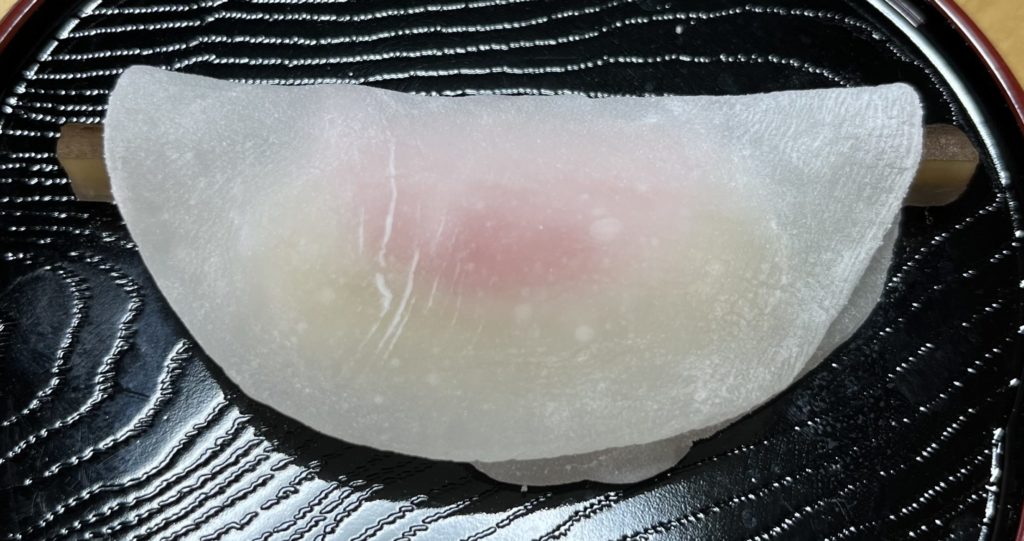
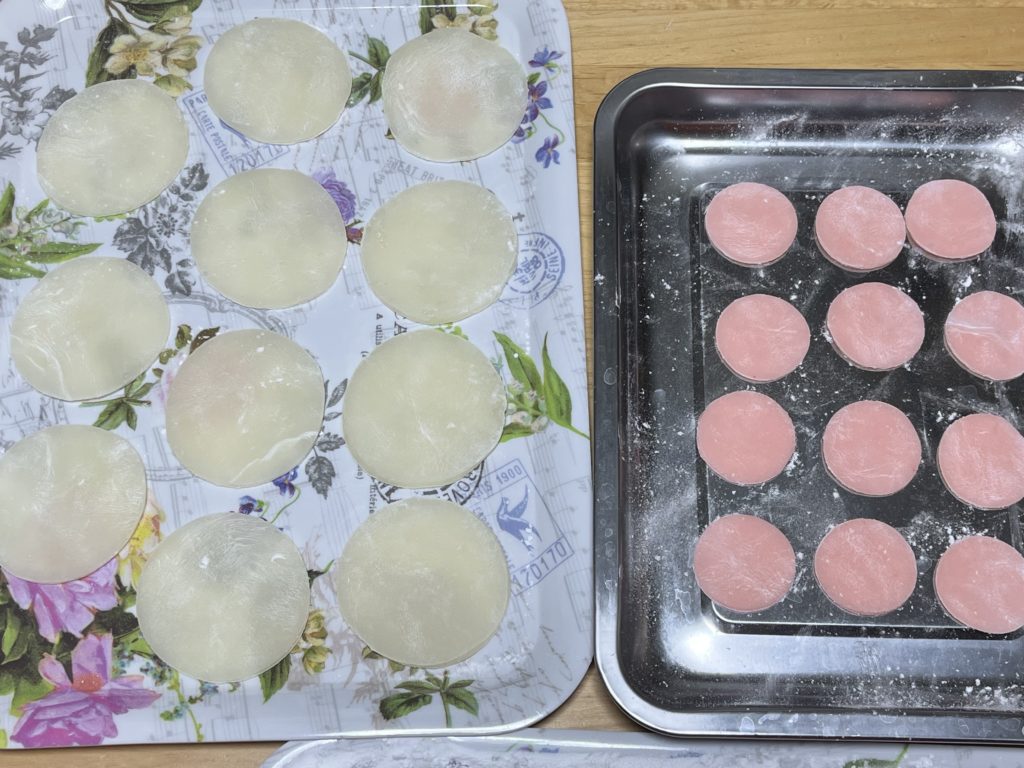
Hanabira-mochi is made with white and pink mochi, candied burdock root, and sweet miso paste (a mix of white miso and white beans paste). The mochi is rolled out and cut into circles. The pink mochi circle, miso paste and burdock root are layered onto the white mochi circle, which is then folded over into a crescent shape. Hanabira-mochi has an elegant and delicate appearance.
The gradation color of the pink mochi showing through the white is glamorous and has a feeling of class. Despite its graceful appearance, Hanabira-mochi also contains burdock root, something that is never described as elegant or glamorous, within its petals. This unexpected combination adds a distinctive touch, providing both a visual and taste experience not found in other mochi confections.
The flavor of Hanabira-mochi is truly unique, combining the moist and soft mochi base with the sweetened burdock root and salty miso paste, achieving a well-balanced blend of refined sweetness and savory notes. Hanabira-mochi stands out as a specialized wagashi with a distinct character compared to other mochi confections.
So where does this sweet come from? And why is there burdock root in this wagashi?!

“Hanabira-mochi” originated from “Tsutsumizoni”, a savory dish that was eaten in the Imperial Court during a New Year ritual called “Hagatame no Gi”. The ceremony began during the Heian period (794-1185 AD) and involved consuming hard foods like ayu sweetfish, mochi, and daikon radish to strengthen the teeth, symbolizing the fortification of age and a prayer for a long life.
Over time, this ritual evolved into a simplified form, and became just a food which had pressed sweetfish and miso wrapped in mochi. Then it became more simplified and people began to use burdock root for it instead of fish. Eventually it evolved into the current form of Hanabira-mochi: a confection of sweet miso paste and burdock root wrapped in mochi.
Hanabira-mochi transitioned from being part of the Imperial Court’s traditions and rituals to becoming a standalone wagashi. During the Meiji era (1868-1912 AD), the Urasenke school of tea ceremony began using Hanabira-mochi as a confection for the first tea ceremony of the year, rapidly elevating its popularity nationwide. In the end, Hanabira-mochi has become a regular seasonal wagashi.
This confection is a traditional sweet, exclusive to the New Year. While the basics are nearly always present, many shops have their own slight variations on this traditional wagashi – using gyuhi instead of mochi, for example. Since each shop’s Hanabira-mochi has its own distinct flavor, I recommend exploring and discovering these differences.
Pingback: New Year Wagashi Workshop – Wada Wagashi