Hello everyone! Have you been enjoying wagashi?
Wagashi, traditional Japanese confectioneries, has a rich history. What were its origins, and how has it developed over time? In this post, I’d like to give you a brief history of wagashi.
The formation of wagashi is deeply tied to Japan’s history and culture. The country’s natural environment, seasonal changes, rituals, and religious events have significantly influenced the development of wagashi. Its history dates back to ancient times, evolving in form, taste, and ingredients over the years to become what it is today.
Originally, Nuts? Ancient Times (Jomon and Yayoi Periods)
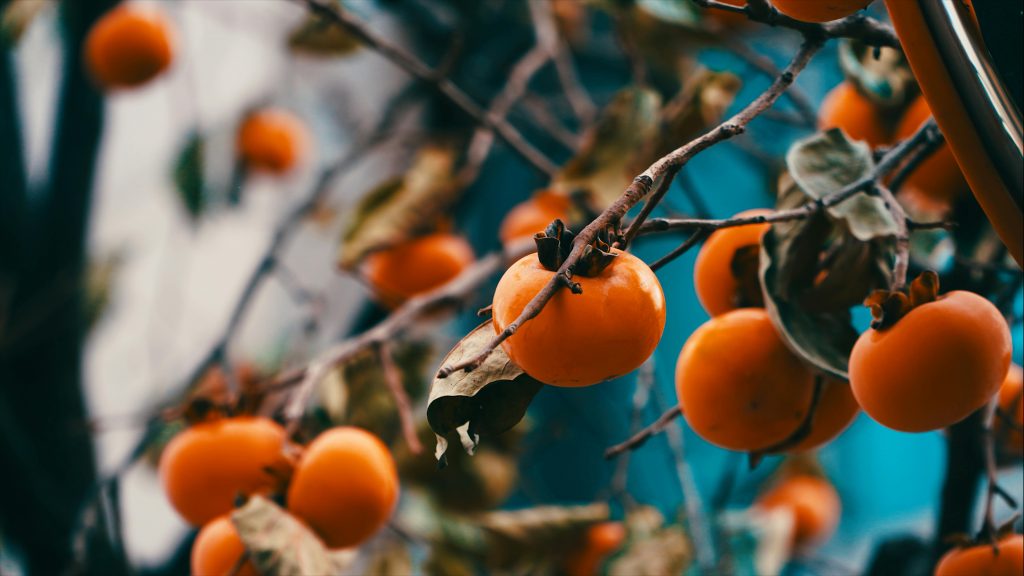
The prototype of wagashi began with the consumption of natural foods like grains, fruits, and nuts. After simple meals, people would eat fruits picked directly from trees or dried versions of them. This snacking is believed to have led to the concept of “kashi” (sweets).
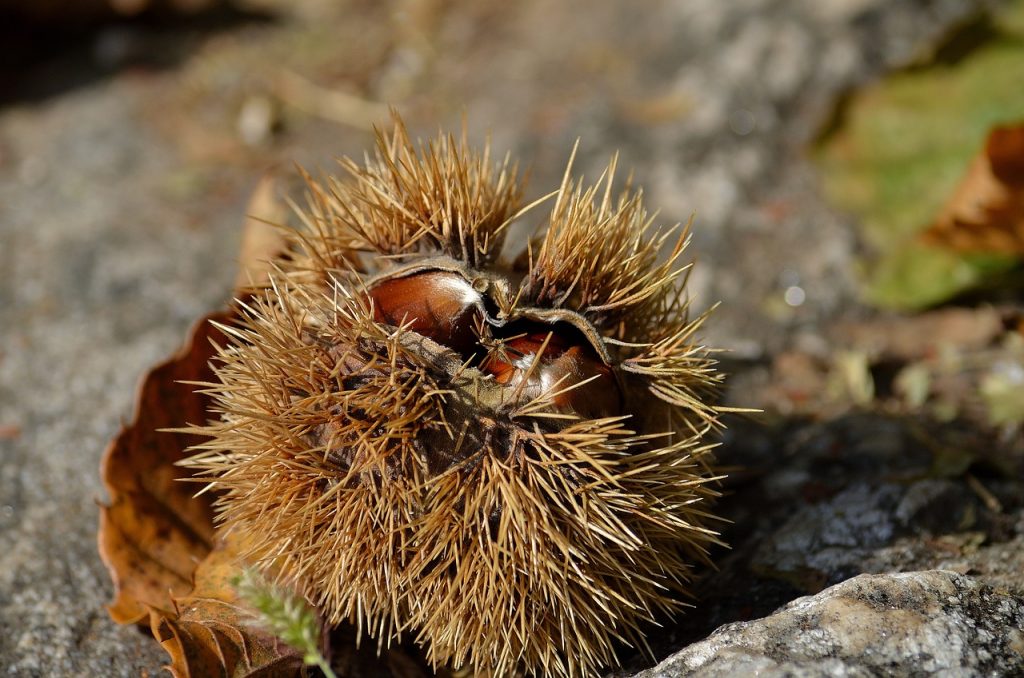
Later, nuts were dried in the sun for preservation, and people learned to crush them using mortars or pestles. Even though agriculture had begun, food was still scarce, so acorns from trees like oak and chinquapin were also eaten, albeit with strong bitterness that made them inedible without processing. By grinding these nuts into flour and leaching them with water, people created dumplings, marking the beginning of “dango.”
Eventually, “mochi,” considered Japan’s oldest processed food, was born. Made primarily from rice, it was treated as a sacred item.
What Were Ancient Sweeteners?
Today, sweets are sweetened with sugar, but what were the ancient sweeteners?
One method involved using “kome moyashi” (rice sprouts) to convert starch into syrup called “ame.” Later, malt was also used, but rice sprout syrup has existed since ancient times.
Another sweetener was “amazura,” a syrup made by boiling the juice of a vine during winter. Historical texts describe how amazura was used in shaved ice, and it was a luxurious commodity, long offered as tribute to the imperial court and shogunate from various provinces.
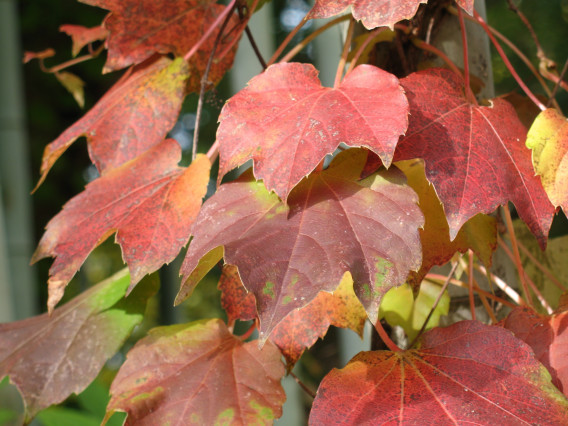
amazura
Sugar was introduced to Japan around 750 AD, but it became widely used only after the Edo period.
Influence from China. Nara and Heian Periods (710–1185)
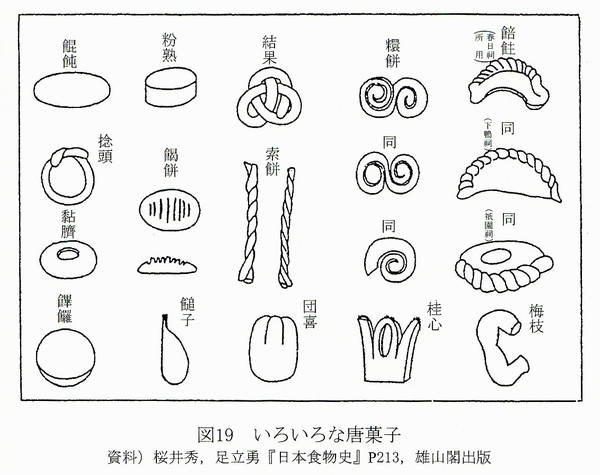
As diplomatic relations with China flourished, many aspects of Chinese culture were imported to Japan. Among the items brought back by the envoys were “karakashi” (Chinese sweets). These included various sweets made from rice, wheat, soybeans, and adzuki beans, which were often shaped into distinctive forms and used in rituals.
This Chinese confectionery significantly influenced the development of wagashi.
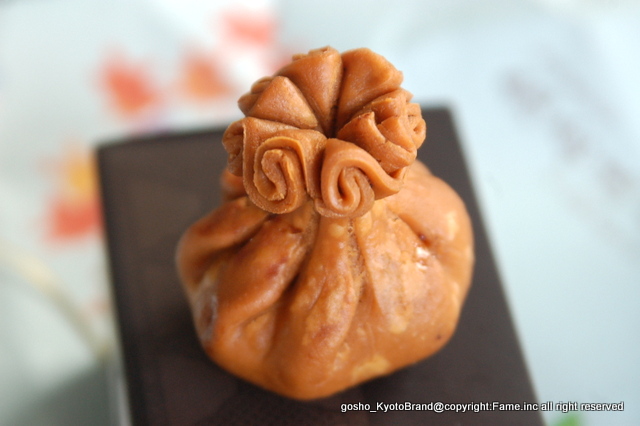
Development with the Tea Ceremony. Muromachi Period (1336–1573)
During the Muromachi period, light snacks called “tenshin” were served at tea ceremonies. One such dish was “atsumono,” which had various forms depending on the ingredients, including “yokan” (a sweet jelly). Originally made with sheep meat, yokan in Japan adapted to use ingredients like wheat or adzuki bean flour instead, as meat consumption was not common. This adaptation marked the beginning of yokan as we know it “mushi yokan” today, transitioning from a soup to a solid sweet. Later, with the discovery of agar, it evolved into the “neri yokan” form around the late Edo period (around 1800).
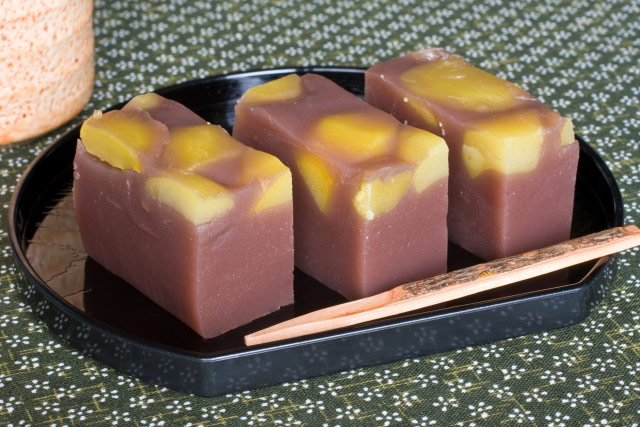
chestnuts mushi yokan, which is one of the mushi yokan as we know it today.
The mainstream of wagashi (traditional Japanese sweets) consists of the so-called tea ceremony sweets, typically consumed before tea in a tea ceremony. In the early days, these sweets included dried persimmons, roasted chestnuts, and at most, thinly baked wheat flour crackers. Over time, the repertoire expanded, refining colors and shapes.
The Arrival of Nanban(Western) Sweets
Later, sweets from the Nanban (Southern Barbarians) arrived, brought by the Portuguese and Spaniards. These included bolo, castella (a type of sponge cake), konpeitō (sugar candy), biscuits, bread, alheito (sugar candy), and egg noodles, which became the prototypes of the wagashi we still enjoy today.

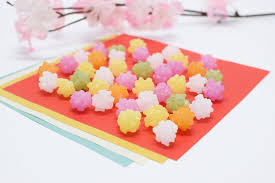
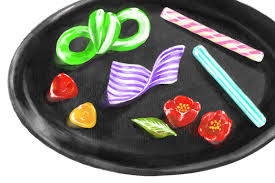
Wagashi’s Flourishing era. Edo Period (1603–1868)
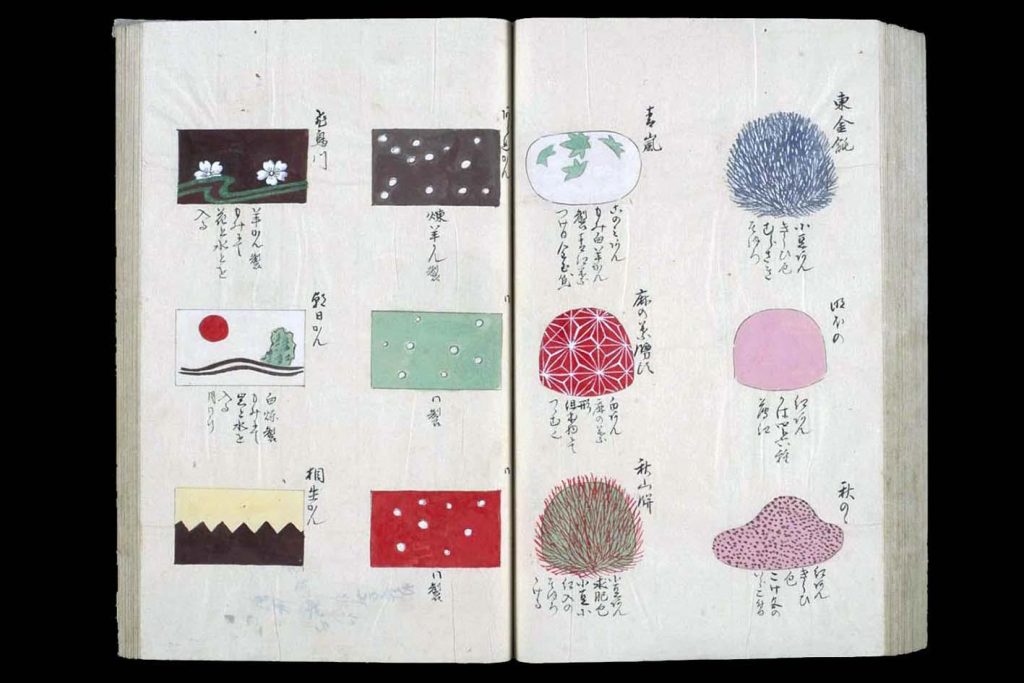
The Edo period saw significant development in wagashi. The availability of sugar increased, making sweets accessible to the common people. Many of the wagashi we still enjoy today, such as dorayaki, daifuku, yokan, and manju, were created during this time, especially in Kyoto and Edo (now Tokyo).
Moreover, the Japanese cultural emphasis on seasonal beauty greatly influenced wagashi, leading to the creation of sweets that reflected seasonal ingredients, colors, and shapes, such as “Jounamagashi” resembling flowers and plants.
The Rise of Western Confectionery. Post-Meiji Period (1868 -Present)
With the arrival of Western culture during the Meiji period, Western sweets and bread became popular. Western cooking tools greatly advanced wagashi, with the introduction of ovens leading to the creation of baked goods like chestnut buns and castella.
Modern Times
Today’s wagashi continues to evolve while respecting tradition. There’s a wide range – from high-end wagashi showcasing artisan techniques to everyday sweets. Additionally, the fusion with Western sweets and the incorporation of new ingredients are increasing, adapting to contemporary lifestyles.
In Conclusion
Wagashi has developed through the influence of various external cultures throughout history. What is remarkable about the Japanese is their ability to understand and absorb imported sweets, transforming them into something unique rather than merely imitating them. Wagashi embodies the creativity of the Japanese people.
As we inherit the innovations of our predecessors, I believe it is my mission to preserve this tradition while embracing diverse cultures and bringing further innovation to modern wagashi in our global society.
While I may sound confident, I still have much to learn and would appreciate any advice from many people as I continue on this journey.