
Hello everyone, are you familiar with ‘Jūsanya’ (the Thirteenth Night)?
The one that’s widely known is ‘Jūgoya’ (the Fifteenth Night), right?
Jūgoya is also called ‘Chūshun no Meigetsu’ (the Harvest Moon), and there’s a tradition of moon viewing called ‘Tsukimi,’ where people enjoy delicious rice dumplings while admiring the full autumn moon.
In fact, besides Jūgoya, there is a unique Japanese tradition called ‘Jūsanya.’ That’s what I’m here to tell you about this time.
what is Jūsanya?
Jūsanya refers to the night of the 13th to 14th of the old lunar calendar. While Jūgoya is a custom that originated in China, Jūsanya began in Japan.
On Jūgoya, people pray to the moon god for a bountiful harvest, but many regions celebrate Jūsanya as a harvest festival to express gratitude for the autumn harvest, as rice harvesting is often completed by this time.
what is the origin of Jūsanya?
There are various theories about the origin of moon viewing on Jūsanya. Among them, a common theory suggests that it began during the Heian period when Emperor Daigo hosted a moon-viewing party and enjoyed poetry.
Both Jūgoya and Jūsanya emphasize the importance of enjoying the moon, and looking at only one of the two moons is referred to as ‘Katamitsuki’ or ‘Katatsukimi.’ This practice is considered inauspicious, believed to bring misfortune and thus frowned upon. Additionally, the combination of Jūgoya and Jūsanya is referred to as ‘Futayo no Tsuki’ (the Two Nights’ Moon).
what is another name of Jūsanya?
Jūsanya has another name, which I’d like to introduce.
During this time, chestnuts and beans are harvested, and because people offer seasonal produce while moon viewing, it’s called ‘Mame Meigetsu’ (Bean Moon) and ‘Kuri Meigetsu’ (Chestnut Moon). This is similar to how Jūgoya is named ‘Imo Meigetsu’ (Sweet Potato Moon) due to the harvesting and offering of sweet potatoes.
Additionally, since Jūsanya is considered beautiful and follows Jūgoya, it is also referred to as ‘Nochino Tsuki’ (the Latter Moon).
Jūsanya also needs dumplings?
During moon viewing, people offer their harvest to the moon to express gratitude for the autumn bounty. It’s important to enjoy the offerings deliciously, as this is believed to strengthen the connection with the deities.
So, what should you specifically prepare for ‘Nochino Tsukimi’? First, you need moon-viewing dumplings. For Jūsanya, you prepare 13 dumplings, arranging 9 on the first tier and 4 on the second. This is different from Jūgoya, in which we prepare 15 dumplings.
In addition, you should offer seasonal fruits and vegetables that have been harvested to give thanks for the autumn harvest. Fruits like chestnuts and grapes, which are in season, are recommended. It would also be good to offer edamame and soybeans, which are associated with ‘Mame Meigetsu.’
Furthermore, you should decorate with pampas grass. It was believed that the sharp edges of pampas grass served as a talisman against evil, and its hollow stems were thought to be a resting place for deities. By decorating with pampas grass, people sought to protect their harvest from evil spirits and misfortunes, while wishing for a bountiful harvest the following year.
what is wagashi related to Jūsanya?
The Jūsanya in 2024 falls on Tuesday, October 15. During the Jūsanya period, many sweets made with chestnuts are available in stores, associated with ‘Kuri Meigetsu’ (Chestnut Moon).
For example,
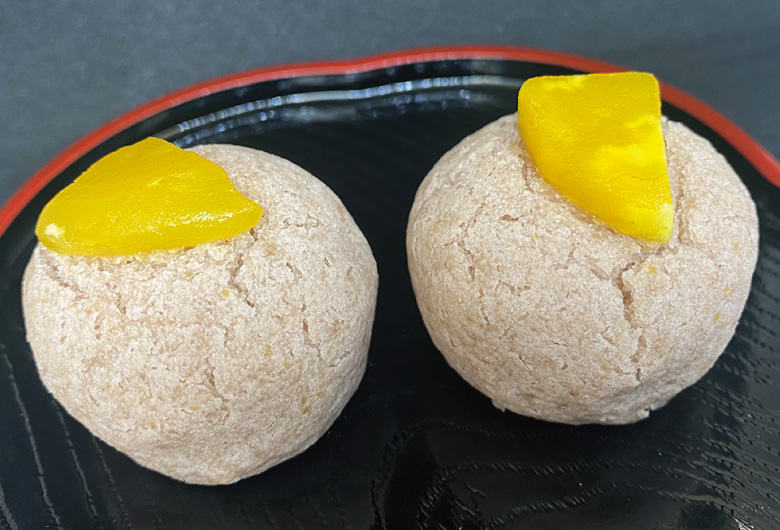
Kuri-shigure
A steamed dessert made by wrapping sweet red bean paste mixed with rice flour around a chestnut.
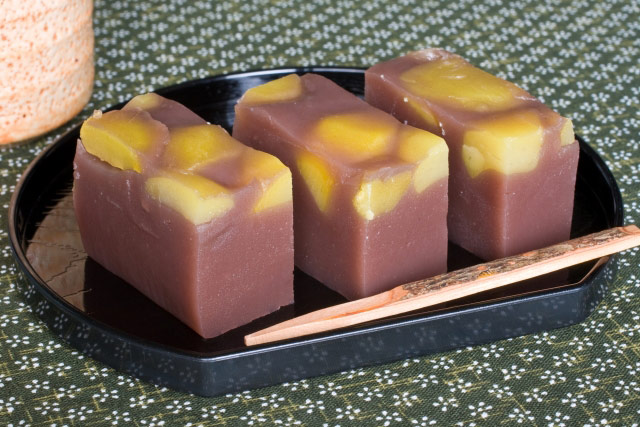
Kuri-mushiyokan
A sweet made by placing chestnut on top of steamed yokan made of sweet red bean paste mixed with wheat flour.
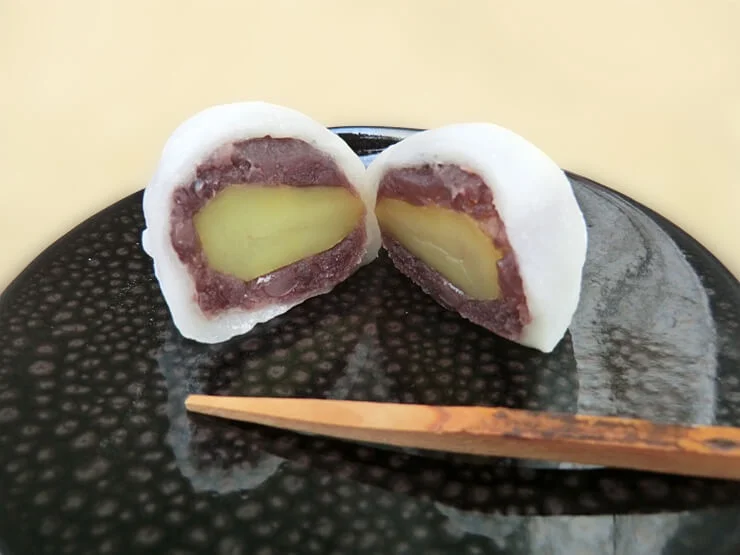
Kuri-daifuku
A dessert made by wrapping chestnuts and sweet red bean paste in mochi (rice cake) dough.
These are just a few examples, and there are various other sweets made by different wagashi shops. Therefore, I encourage you to visit various wagashi shops and enjoy the sweets available during the Jūsanya season.